In the Name of Allah, the Beneficent, the Merciful

The Islamic View & Review
A Lahore Ahmadiyya magazine,
in tribute to the Islamic Review of Woking, England (1913 – 1968)
Patron: Mr Nasir Ahmad · Editor: Dr Zahid Aziz
© Ahmadiyya Anjuman Lahore Foundation (UK)
Available online at: www.aaiil.uk/islamic-view/
November 2026 · Vol. 2, No. 11
Contents
-
Talk at the UK Lahore Ahmadiyya Centre, London, 6 September 2026
by Habiba Anwar -
A Brief History of Psychiatry in Islam
Talk at the UK Lahore Ahmadiyya Meeting, 4 October 2026
by Dr Faizaan Ahmad -
Talk at the UK Lahore Ahmadiyya Meeting, 4 October 2026
by Salman Ahmad -
New publication: The Lahore Ahmadiyya Movement — An Analytical Review
Author: Dr Robbert Bipat
-
Muslim Culture Week Open Day at the Berlin Mosque — 3 October 2026
by Amir Aziz, Imam of the Berlin Mosque
Talk at the UK Lahore Ahmadiyya Centre, London, 6
September 2026
by Habiba Anwar
For my talk today, I picked a topic that I would like to hear discussed. If I were to come to a meeting, what would I really want to learn more about? And so, I landed on the topic of parenting, because it is something that has consumed my life for the past twelve years. I hope that what I share with you today resonates with all of you, including those of you who have already raised children into adulthood, and even those who are not parents yet themselves. That is because I hope to bring to the table the idea that we all have parental responsibilities as a community and to all the children within it.
I want to begin with a confession: parenting is hard! It’s one of the most important things human beings do, and yet most of us enter this role with very little preparation. And this seems even more obvious when we compare this to how we prepare for careers. It can take years to train to become doctors, teachers, lawyers, accountants, etc. You need to study for specific qualifications. Take lawyers, for example: you don’t just have to do a bachelor’s degree in law; you must follow it up with a professional training qualification like the LPC (Legal Practice Course). Even after that, you still must do another two years of training under the supervision of other lawyers, and then you become a qualified solicitor in the UK. Now, contrast that with becoming a parent.
As a first-time parent, you are suddenly responsible for another human being: their physical wellbeing, their emotional development, their character, their relationship with the world, and, for Muslim parents, their relationship with Allah. All without training, qualifications, or studying. And so, we look for a formula. Maybe we turn to our own parents or extended family, or we look at how our peers around us are parenting, and we boil this down to a handful of rigid steps:
– Do these things. Teach these values. Say these words.
– Discipline in this way, not that.
– And if you do it properly, you will raise a good Muslim child. As simple as that. If you don’t get the child you want, you must’ve messed up a step along the way. It's as black and white as that.
But this is not the picture we find in the Quran. The Quran doesn’t give us a handbook of perfect parenting; instead, it gives us people.
It gives us the stories of parents who loved their children, worried about them, made difficult decisions for them, experienced separation, suffered grief, and sometimes had to accept that parents cannot control what happens to their children. And one of the most extraordinary things about these stories is that some of these parents are among the people closest to Allah:
· We learn about the trust between a parent and child in the story of the prophets Ibrahim (Abraham) and Ishmael.
· We learn about maternal fear in the story of Moses’s mother.
· We recognise the longing for a child in the story of the prophet Zachariya.
· We relate to the hopes and dreams that expectant parents have for their unborn children in the story of Mary’s mother.
· We even learn about caring for and advocating for a vulnerable child who isn’t biologically yours in the powerful story of Aasiyah, who adopted Moses and was the wife of the Pharaoh of the time.
I wish we could go into detail with all of them, but for today, I’m going to focus on three people, and even then, I’m only touching on small, specific parts of their stories. I’ll talk about Mary, or Hazrat Maryam as we also refer to her, and what her own birth teaches us about how we should view children and parenting in general. I’ll also talk about Hazrat Luqman, and what he teaches us about how we speak to children. And finally, I’ll touch on the story of Jacob (Hazrat Ya‘qub) and how Allah validates the difficulties of parenting through his story.
Maryam (Mary)
Regarding Hazrat Maryam, I initially wanted to look at her own experience of motherhood with Jesus (Hazrat Isa), but her story in the Quran begins before she was even born. And it’s her mother’s story that I’m going to touch on instead.
Allah tells us in 3:35–37 of the Holy Quran that Maryam’s mother dedicated what was in her womb to Allah. In other words, we’re told here of the very relatable way in which expectant parents have hopes and dreams for their child. They imagine what they want for that child, and in this case, even the child’s gender, because she was imagining having a son that she could then raise free from all worldly services, devoted exclusively to Allah; that was her dream for her unborn child.
And of course, we know that she gave birth to a daughter, and we’re told in verse 36: “And Allah knows best what she delivered.”
Maryam’s mother had a sincere, even beautiful, vision for her unborn child. She could have felt disappointed that her dream was “rejected,” so to speak. She wanted a child wholly devoted to Allah, and she thought that meant a son serving in the sanctuary. But Allah gave her Maryam, who became extraordinarily devoted to Him and whose role in sacred history was far beyond what her mother could have imagined.
There’s a subtle and beautiful parenting lesson here: we don't know what our children are going to become. Typically, all parents have ideas of what they want their children to do with their lives, and we can turn them into a project:
My child will be this kind of Muslim. My child will be a doctor or a lawyer. My child will do the things I couldn't do.
None of these dreams are “bad” dreams to have, but there is a danger that our hopes can become expectations, and our expectations may become demands.
Maryam’s birth story is a reminder that Allah knows the child more completely than the parent ever can, even before the child is born. And perhaps that is part of what it means to recognise a child as an amānah: something we’re entrusted with. We’re not given ownership of their destiny.
In verse 37, Allah says that she was blessed with a pleasant upbringing, or this is sometimes translated as “He made her grow in a good manner.” The key word is nabātan, which comes from the root nabata. From the same root come words which mean to germinate. I find that imagery so interesting.
A child is something that grows; it’s not something you manufacture. If you think of a plant, what can you do for it? You can provide the right conditions for that plant to thrive, such as water, sunlight, good soil. But you don’t control its actual growth, or how much it will grow, or how strong it will be, or whether it even grows at all!
This one word made me really pause and think: instead of our mindset as parents being: “How do I make my child become XYZ?” maybe it should be: “How do I help this child grow into the person that Allah has created them capable of becoming? How do I provide the right conditions and environment?”
The rest, the actual results, that’s something that is not in my hands.
We could spend so much time going further into this story and Maryam’s own story of motherhood; it’s full of so many lessons.
Luqman
Let’s have a look at Hazrat Luqman. In Chapter 31, the Quran gives us a glimpse into an actual conversation between a parent and child. Through various verses, we hear of Luqman giving his son advice about his relationship with God, his character, and the way he moves through the world.
But the thing I want to focus on is not the advice itself, but how he addresses his son.
Verse 13 reads: “And remember when Luqman said to his son, while he advised him: O my son, never associate anything with Allah.”
Note that the word “son” appears twice here, and this is a wonderful example of the depth of Arabic, because two different Arabic words are used, which in English both simply translate to “son.” But in Arabic, we have two slight variations. In the first instance, the verse says “when Luqman said to his son ….” Here, the word for “his son” is ibni-hi. And then in the same verse, we’re told Luqman said: “O my son,” and the Arabic changes to Ya bunayya. A small change, but the difference between banī and bunayya is son and my dear son. Allah has used this slightly changed word to show love and endearment, and to show us that Luqman addresses his child, showing compassion and tenderness. And this subtle lesson is for all of us, even in non-parenting situations. Allah is showing us the most effective way of giving advice.
The Quran teaches that guidance is not just about giving facts and drumming them into the listener’s ears; how you deliver that advice is equally important, and the lesson we learn here is: affection before instruction. And we have the science to back this up now too. A 2006 study on advice-giving found that people are more receptive to advice when they feel connected to and supported by the person giving it. Other research in 2020 also found that advice can become less effective when it feels intrusive or threatening. The same advice can land very differently depending on the tone in which it is delivered. “You need to do this” can sound like a command, whereas “My dear son, let me tell you something important” opens a conversation.
Jacob (Ya‘qub)
The story of the prophet Jacob (Ya‘qub) in the Quran quietly challenges the idea that a good parent is always calm, certain, in control, and emotionally unshakeable. Instead, we see a more human parent. Ya‘qub is a man of faith; he is a prophet of Allah. And yet his experience of parenting includes jealousy between siblings, poor decisions by his children, deception, separation, grief, uncertainty, and fear.
One of the things we sometimes do, particularly in religious and cultural discussions of parenting, is create an impossible picture of the “good parent.” A good parent raises perfectly behaved children. A good parent always knows what to do. And if things go wrong, it is the parent who must have failed. But Hazrat Ya‘qub’s story challenges that idea.
The story begins with his son, Yusuf, sharing his remarkable dream. He says:
“O my dear father, indeed I have seen eleven stars and the sun and the moon; I saw them prostrating to me” (12:4).
Ya‘qub immediately understands that this dream is important and is no ordinary dream. His response is protective. He says:
“O my dear son, do not relate your vision to your brothers, lest they devise a plan against you…”
What is interesting here is that Ya‘qub sees a danger that Yusuf does not. And parents often do. They can sometimes see vulnerabilities and dangers developing before their children fully understand them. Through this story, the Quran gives space to that parental anxiety. Sometimes a parent can see possible dangers everywhere, and the terrible truth of parenting is that eventually, you must let your children go beyond your sight. You cannot accompany them into every friendship, every classroom, every journey, every decision.
Despite his foresight and his protectiveness, ultimately Ya‘qub's fear does not prevent Yusuf’s separation from him, which is one of the hardest lessons in the story. But the Quran does not present Ya‘qub as a failed father because he could not prevent Yusuf’s suffering. Instead, it shows us what to do when things happen that we can’t prevent; we must turn to Allah with our pain and never lose hope.
Collective responsibility of parenting
Before closing, I’d just like to share one last thing that I understood from my readings. The Quran doesn’t place the entire burden of raising and protecting children on individual parents. There is a recurring idea of collective responsibility: the Quran often tells us that a healthy Muslim community has obligations toward the vulnerable, the family, justice, education, and moral well-being. Allah says: “Let there be a group among you who call (others) to goodness, encourage what is good, and forbid what is evil—it is they who will be successful” (3:104).
The word for “group” here in Arabic is ummat-un, which, as everyone knows, also means community. And what makes a community? Relatives, teachers, neighbours, the Jamaat, friends, institutions, etc. So, in this verse, Allah is placing on all these people the responsibility of calling our children and each other to what is right.
Allah also says: “Help one another in goodness and righteousness” (5:2). In other words, this is a call to support each other, especially in the doing of good and being righteous; this verse emphasizes that this is something that’s cooperative and shared, and something we participate in together.
We often speak about parenting as though it is the private responsibility of a mother and father. I want us to think about the wider questions that come to mind if we truly believe that the gentle, loving nurturing of children in our community is something for which we all have some degree of responsibility, not just the parents. Then, we need to consider:
· Are the parents around us feeling supported? Are they feeling judged?
· Do struggling families have somewhere to turn?
· Are children safe in religious spaces?
· Are vulnerable children actively being protected?
· Are we as a community making it easier or harder for parents to raise children well?
The child as an amānah may be placed most directly in the hands of parents, but the responsibility for creating an environment in which children can flourish cannot belong to parents alone.
And so, I’ll end here, and I’d like to invite all of you to share your thoughts, and in particular I’d love to know if there’s a particular story from the Quran that you are drawn to … either one of the ones I’ve mentioned, or another.
A Brief History of Psychiatry in Islam
Talk at the UK Lahore Ahmadiyya Meeting,
4 October 2026
by Dr Faizaan Ahmad
When we think about the history of psychiatry, we tend to think about Europe. We think about figures such as Philippe Pinel, who is often associated with the reform of psychiatric care in eighteenth-century France, Emil Kraepelin and the development of psychiatric classification, and later Freud and the development of psychoanalysis. We tend to imagine psychiatry as a relatively modern medical discipline, emerging from the hospitals and universities of nineteenth-century Europe.
But if we move much further back in history, and look towards the medieval Islamic world, we find a rather different story. From around the eighth century onwards, the Islamic world became a major centre of medicine, philosophy, and scientific scholarship. In cities such as Baghdad, Damascus and Cairo, physicians were translating and developing knowledge from Greek, Persian, and Indian traditions. Hospitals were being established, medical texts were being written, and physicians were attempting to understand not only diseases of the body, but also disturbances of the mind and behaviour.
Individual not only a biological organism
What I find particularly interesting about this history is that these medical ideas developed alongside a religious and philosophical understanding of what it meant to be human. The individual was not always understood simply as a biological organism with a brain producing thoughts and behaviour. Instead, Islamic thinkers frequently considered the interaction between the body, the mind, the qalb (heart), the nafs (self), and the rūḥ (spirit). I feel this creates a very interesting starting point for psychiatry, because it raises a question that is still relevant to us today.
When somebody becomes mentally unwell, what exactly are we treating? Are we treating a brain disorder? Are we treating psychological suffering? Are we treating the effects of someone's social circumstances? Or is there also a spiritual dimension to the person's experience? Islamic thought has engaged with this question for centuries.
The Quran itself is, of course, not a psychiatric textbook. It doesn’t describe schizophrenia or bipolar disorder in the way that we would today. But it contains a considerable amount of discussion about human suffering, emotional distress, healing, and the inner state of a person.
One of the verses that perhaps captures this particularly well is as follows:
“Surely in the remembrance of Allah do hearts find rest” (13:28).
The Arabic word qalb, usually translated as heart, has a much broader meaning in Islamic thought than simply the physical organ. It can refer to the inner self, emotions, intentions, and spiritual condition of a person. So, when the Quran speaks about the heart finding rest, we can see this as something much broader than just cardiovascular health. It can be seen as describing an inner state of tranquillity.
There is another verse which I find to be particularly useful and I’m sure most of you will be aware of when experiencing adversity. The Quran says:
"Indeed, with hardship comes ease” (94:5–6).
It is a very simple statement, but it provides a particular framework for understanding suffering. Suffering is acknowledged as real, but it is not presented as permanent or without the possibility of relief. There is an interesting concept in psychology called cognitive schemas. There are mental frameworks or structured blueprints that help the brain organize, interpret, and process information. For example, let’s say you see a raspberry for the first time. You may recognise that it’s a berry because of the similarities it has to strawberries; here you’re using a berry schema. Now those are object schemas, but what I think we can relate to this verse is self-schemas. For example, someone may have a self-schema of extraversion if they think of themselves as both extraverted and believe that extraversion is central to who they are. A self-schema for extraversion may include general self-categorisations "I am sociable” beliefs about how they would act in certain situations ("At a party, I would talk to lots of people") and also memories of specific past events ("On my first day at university I made lots of new friends"). Now if we were to read the verse “Indeed, with hardship comes ease” and we were to read it regularly, intentionally, and reflect on it, it would create positive schemas in our self so that when we are faced with hardships our natural reaction is not one of despair and hopelessness.
Similarly, we have the verse:
“Allah does not burden a soul beyond what it can bear” (2:286).
Again, this isn’t a statement about psychiatric diagnosis. But it gives psychological suffering a theological context. Human beings experience difficulty, but that difficulty occurs within a broader framework of endurance, hope and reliance upon God.
Perhaps the verse that is most obviously connected with the idea of healing is the following: “We send down of the Quran that which is a healing and a mercy to the believers” (17:82).
The Arabic word used here is shifa, meaning healing.
It is important, however, not to interpret this retrospectively as a prescription to replace medical treatment with religious practice. Classical Islamic scholars discussed this concept of healing in broader spiritual and moral terms. The Quran could provide comfort, guidance, and spiritual healing without that necessarily being seen as a substitute for medicine, and this distinction becomes important as we move into the development of Islamic medicine.
Contributions during the Islamic Golden Age
During what is often called the Islamic Golden Age, particularly from the eighth century onwards, medicine became a major intellectual discipline. The Abbasid capital of Baghdad became an extraordinary centre of scholarship. Greek medical works were translated into Arabic, but these works were not simply copied. Muslim physicians criticised them, expanded upon them, and incorporated observations from their own clinical experience. Hospitals, known as bīmār-istāns, were established in several major cities. These institutions were not necessarily equivalent to modern hospitals, and we should be careful about imposing modern categories upon them, but they provided organised medical care to patients. Some of these institutions also cared for people experiencing severe disturbances in behaviour and mental functioning.
There is debate among historians about which institution should be described as the first psychiatric hospital because our modern distinction between a general hospital and a psychiatric hospital did not exist in the same way at the time. Nevertheless, there is good historical evidence that people experiencing mental disturbance were receiving institutional care within the medieval Islamic medical system.
One of the most important figures was Abu Bakr Muhammad ibn Zakariya al-Razi, known in the West as Rhazes. He lived from approximately 865 to 925 AD and was a physician, philosopher, and polymath. Al-Razi was particularly well known for his emphasis on clinical observation. Rather than simply accepting ancient medical authorities, he was interested in observing patients and drawing conclusions from what he saw. His approach to mental illness appears to have involved much more than simply giving medication. Historical accounts describe the use of physical treatments alongside approaches involving diet, bathing, music, occupation, and psychological support.
It would be incorrect to describe this as modern psychiatry. Al-Razi was working within the medical understanding of his own time, but there is something striking about the philosophy behind it. The idea that a person experiencing mental illness might benefit from meaningful activity, social interaction, psychological support, and attention to their environment sounds remarkably familiar to how we formulate patients in the present day. Modern psychiatry talks about occupational therapy, behavioural activation, social prescribing, and the importance of a therapeutic environment. Al-Razi was obviously not practising these things in their modern form, but the idea that treatment should address more than the physical body was already present.
This brings us to perhaps the most fascinating figure from the perspective of modern psychiatry: Abu Zayd al-Balkhi. Al-Balkhi lived during the ninth and tenth centuries and wrote a remarkable work known as Maṣāliḥ al-Abdān wa al-Anfus, which can be translated approximately as Sustenance of the Body and Soul. The title itself is very revealing.
He was interested not only in the health of the body but also in the health of the psychological and spiritual self. In his writing, al-Balkhi discusses experiences that we would recognise as anxiety, fear, depression, anger, obsessive thoughts, and phobias. What is particularly interesting is that he didn’t simply describe these experiences as moral failings or supernatural phenomena; he attempted to understand them as psychological states that could be associated with physical symptoms and that could potentially be treated.
He recognised, for example, that intense psychological distress could produce physical changes within the body, an idea which is now completely familiar to us. We know that anxiety can produce palpitations, sweating, gastrointestinal symptoms, and breathlessness. We understand the role of the autonomic nervous system and the physiological stress response. Al-Balkhi didn’t have access to modern neurobiology, but he recognised the fundamental relationship between psychological and physical states.
He also discussed ways of managing fear that have some interesting similarities to principles we now associate with psychological therapy. He recognised that avoiding something frightening could reinforce fear, and he discussed approaches involving gradual confrontation and changing the way a person thinks about the feared situation. Nowadays the integration of thoughts, emotions and behaviours in modern medicine is a key concept to cognitive behavioural therapy. It would be historically inaccurate to say that al-Balkhi invented cognitive behavioural therapy. CBT developed many centuries later from a very different intellectual tradition, but it is remarkable that someone writing over a thousand years ago was describing the relationship between thoughts, emotions, physical symptoms and behaviour in a way that can sometimes sound surprisingly familiar to modern psychiatry.
Another major figure was Ibn Sina, or Avicenna, who lived from approximately 980 to 1037 AD. His Canon of Medicine became one of the most influential medical texts in both the Islamic world and medieval Europe. Avicenna was also interested in the relationship between emotional and physical states. He recognised that emotions such as fear and anxiety could produce physical changes within the body. A patient with panic disorder can present with chest pain and palpitations. Someone experiencing depression can develop profound changes in sleep, appetite, energy, and physical functioning. We now have sophisticated biological explanations for these phenomena, which Ibn Sina did not, but he recognised the connection, and that mind-body relationship was an important part of Islamic medical thought.
Alongside these physicians, Islamic intellectual history also contains an enormous amount of thinking about the inner psychological life. One of the most important figures here is Abu Hamid al-Ghazali. Al-Ghazali wasn’t a psychiatrist in the modern sense. His work was primarily theological and philosophical, but he wrote extensively about the inner self. He discussed the nafs, the qalb, the rūḥ, emotions, desires, and the struggle to control one’s thoughts and impulses. One particularly interesting concept is waswasa, which can be understood as troubling or intrusive whisperings or thoughts. It would be wrong to equate waswasa directly with obsessive-compulsive disorder and the intrusive thoughts that are associated with OCD; however the existence of such a detailed vocabulary for unwanted internal experiences tells us something important: Islamic thinkers were not simply interested in what a person did, they were interested in what was happening inside the person.
They asked questions about thoughts, intentions, emotions, desires, and the relationship between these experiences and a person's behaviour, which brings us to one of the most interesting tensions between Islamic theology and modern psychiatry.
The question of jinn
One of the most controversial questions within Islamic thought is whether jinn can possess human beings and cause physical or mental illness. Some Islamic scholars believe that possession is possible. They draw on Quranic verses such as 2:275, which describes someone affected by Satan as appearing as though beaten into insanity, as well as hadith describing the Prophet Muhammad responding to a child experiencing repeated fits by seeking protection in Allah. The Quranic description of jinn being created from “fire” is interpreted as a metaphor for a volatile, quick-tempered, or unrestrained human disposition — contrasted with the human creation from “clay,” which signifies a malleable nature receptive to social order and divine guidance. Other scholars dispute this interpretation. They point towards verses such as “Feeble indeed is the cunning of Satan” (4:76), and Satan’s statement that he had no power over people other than calling them and having them respond. From this perspective, Satan and jinn may tempt or influence people, but do not have the ability to take control of them. Therefore, even within Islam, there is no universal agreement about the relationship between jinn and mental illness.
For Muslims who do believe in possession, a wide range of symptoms may be attributed to jinn. These can include dramatic personality changes, mood swings, crying or laughter, social withdrawal, unusual physical strength, convulsions, altered sensation, changes in voice, insomnia, nightmares, altered consciousness, and speaking in an unknown language. Spiritual signs may also be described, such as an intense reaction to Quranic recitation or a change in religious belief. However, studies have found considerable variation in the symptoms reported, suggesting that there is no consistent clinical presentation of what is described as possession. Traditional Islamic treatment generally involves ruqyah, which involves Quranic recitation and seeking protection in Allah, alongside dhikr, or remembrance of Allah. These practices may be performed by the individual or with the assistance of a raaqi. At the same time, practices involving physical punishment, amulets, or attempts to communicate with other jinn are generally condemned by Islamic scholars.
What makes this particularly important for psychiatry is the considerable overlap between descriptions of jinn possession and recognised psychiatric or neurological disorders. ICD-11 includes possession trance disorder within the dissociative disorders. This involves a marked alteration in consciousness and identity, where the person’s usual sense of identity is replaced by an external possessing identity, accompanied by a sense that their behaviour is being controlled. Importantly, the diagnosis requires the experience to be involuntary, distressing or impairing, and to occur outside culturally expected religious or spiritual practices. The DSM-5 similarly recognises possession as a possible presentation of dissociative identity disorder.
There is also substantial overlap with other psychiatric conditions. Psychosis, which simply is a loss of touch with reality, can involve hallucinations, delusions, passivity experiences, and disorganised behaviour, all of which may be interpreted through a cultural framework of jinn possession. For example, someone experiencing auditory hallucinations may believe that a jinn is speaking to them, while someone experiencing a passivity phenomenon may understand the feeling that their thoughts or actions are being controlled as evidence of possession. Mood disorders, OCD, trauma-related disorders, epilepsy, delirium, Tourette’s syndrome, and other neurological conditions have also been associated with presentations attributed to jinn. Studies have described that many people presenting with claims of possession had an identifiable psychiatric diagnosis, although the exact diagnoses varied considerably between studies.
Culture in psychiatric assessment
This brings us to the importance of culture in psychiatric assessment. Jinn possession can potentially function as a cultural explanation or perceived cause of distress. A patient may fully accept that they have a medical illness while simultaneously believing that jinn have caused or contributed to it. For others, possession may provide a culturally understandable way of expressing psychological distress, particularly where mental illness carries stigma. In this sense, the belief itself should not automatically be interpreted as evidence of psychopathology. The clinician needs to distinguish between a culturally accepted religious belief and an individual’s pathological interpretation or experience.
Muslims themselves take very different approaches to this issue. Some believe their symptoms have entirely medical causes and seek medical treatment alone. Others believe they have a medical condition, but that jinn may have contributed to it and therefore seek both medical and spiritual help. A third group may believe their symptoms are entirely due to possession and seek help primarily from a faith healer. These differences are influenced by individual beliefs, previous experiences, education, socioeconomic circumstances and, importantly, the type of symptoms being experienced. Every historically, Islamic thinkers have also disagreed: Ibn Sina, mentioned previously, believed psychiatric symptoms had physiological causes and rejected jinn as an explanation, whereas Ibn Taymiyah regarded possession as possible and believed it could produce physical and mental symptoms.
Interestingly, people may be particularly likely to attribute certain experiences to jinn. Seizures, psychotic symptoms, and sleep paralysis are examples. During sleep paralysis, a person may experience paralysis, frightening hallucinations, pressure on the chest and the sensation that another presence is in the room. Within an Islamic framework, these experiences can understandably be interpreted as supernatural, particularly given beliefs surrounding the soul during sleep. The source also highlights that sudden onset of symptoms or failure of medical treatment may lead someone who initially believed their illness was medical to subsequently consider jinn as an explanation.
For psychiatrists, therefore, the key message is not to dismiss the patient’s belief in jinn, but also not to assume that jinn possession explains their symptoms. A culturally sensitive assessment should allow the patient to explain what they believe is happening, while still assessing for neurological and psychiatric causes. Importantly, many Muslim patients are comfortable receiving both medical and spiritual treatment. Studies described in the source suggest that patients may seek help from both doctors and faith healers, and many faith healers themselves encourage patients to seek medical treatment.
Coexistence of Islamic and modern psychiatric approaches
Ultimately, this is perhaps where Islamic and psychiatric approaches can coexist most constructively. Spiritual practices such as ruqyah and dhikr can provide comfort, meaning, protection and a sense of connection with Allah, without necessarily replacing medical treatment. Indeed, the source describes the Islamic tradition as historically treating mental illness similarly to physical illness, while also incorporating spiritual practices. Even scholars who did not necessarily accept jinn possession, such as Al-Ghazali, encouraged ruqyah because of its potential therapeutic and comforting effects. Research has also suggested benefits from spiritually adapted psychological therapies in Muslim patients.
So, in conclusion, the belief in jinn possession sits at a fascinating intersection between Islam, culture, neurology, and psychiatry. Belief in jinn is widespread among Muslims, but beliefs about their ability to cause mental illness vary considerably, even among Islamic scholars. For healthcare professionals, understanding this belief is essential because it may influence how a patient explains their symptoms, where they seek help, and how they engage with treatment. The most culturally sensitive approach is therefore not to ridicule or automatically reinforce the belief, but to understand the patient’s explanatory model, investigate appropriate medical and psychiatric causes, and where appropriate allow spiritual practices to coexist alongside evidence-based healthcare. This allows us to treat not only the illness, but also the person within their cultural and spiritual world.
Talk at the UK Lahore Ahmadiyya
Meeting, 4 October 2026
by Salman Ahmad
My search for the answer to this question, Is Islam Modern?, was at first in the usual, easy way: on social media. A couple of answers I got were not satisfying; I found them to be shallow both in argument and depth. In fact, they were responses to popular misconceptions and beliefs the world holds about Islam.
One day I found one of our own Jamaat’s publications, entitled Islam is Modern, by the second Head of the Lahore Ahmadiyya Movement, Maulana Sadr-ud-Din. It was first published in 1957 and revised in 1971. My talk of today is based on that extended essay.
I begin with a question that sounds simple, but isn’t: When we call something “modern,” what do we mean?
· Do we mean the concept/framework agrees with us?
· Do we mean it arrived recently?
· Or do we mean something more specific, for example, a value system anchored to a belief system?
That third definition is the one I’ll use today. Reading Maulana Sadr-ud-Din’s treatise, it occurred to me that unless a reader already believes in the Quran, they may find it hard to accept his arguments on faith alone — however they may be fully supported by the Divine Word. So I set out to compare the themes he draws from the Quran against the UN Charter, using the Charter as an operational definition of a “modern” value system (peace, sovereign equality, human rights, justice, cooperation).
My claim is not that either document copied the other. It’s that the themes in the book — drawn from the Quran, whose last revelation came in 632 CE — match the very problems each UN body was set up to solve. While there is a great temporal gap between what the Quran presents and what the UN Charter and Universal Declaration of Human Rights advocate, the conceptual gap, I found, is far narrower.
Let’s start where the Quran itself begins its address to humanity. In Surah Al-Baqarah, Allah says: “Mankind is a single nation” (2:213). Theologically, one God, one Creator; therefore one humanity.
The Quran develops this further. In Surah Al-Hujurat, it says:
“O mankind, surely We have created you from a male and a female, and made you tribes and families that you may know each other. Surely the noblest of you with Allah is the most dutiful of you. Surely Allah is Knowing, Aware” (49:13).
From these two verses we draw out something important: The unity of God is not only a private article of faith; it is political evidence for the unity of humanity.
Now set that beside the Universal Declaration of Human Rights. Its Preamble, and Articles 1 and 2, state the UN’s purpose as promoting human dignity and equality “without distinction as to race, sex, language, or religion.”
A different institution, writing in a different century — landing in the same place.
Institutionally, the General Assembly represents the equality of nations, where, in principle, every member state, large or small, has one seat and one vote.
The Holy Prophet (peace be upon him) had already made the same point, centuries earlier, in his Farewell Pilgrimage sermon:
“… All humans descend from Adam and Eve; an Arab has no superiority over a non-Arab, nor a white over a black, except by piety and righteous action.”
Let’s turn now to dignity. Allah says in Surah Bani Israil:
“And surely We have honoured the children of Adam, and We carry them in the land and the sea, and We provide them with good things, and We have made them to excel highly most of those whom We have created” (17:70)
Similarly, in Surah At-Tin, Allah says:
“Certainly We created man in the best make” (95:4).
These verses show that Allah has conferred upon mankind a distinguished and privileged position — one that must be respected.
Place those two verses beside the very first line of the UN Charter’s Preamble which recognises “faith … in the dignity and worth of the human person …” as the foundation of freedom, justice, and peace in the world. I find this not to be a loose but an exact thematic match.
Let us move to next to the political governance. The Quran instructs the Holy Prophet (peace be upon him) to “take counsel” in the matter of the community:
“Thus it is by Allah’s mercy that you are gentle to them. And if you had been rough, hard-hearted, they would certainly have dispersed from around you. So pardon them and ask protection for them, and consult them in (important) matters. But when you have determined, put your trust in Allah. Surely Allah loves those who trust (in Him)” (3:159).
Islam establishes a real democratic form of government. Islam promotes the freedom of opinion, ideas, and economic freedom. This is further evident from the early Islamic governments themselves, which were consultative and accountable in practice, not just in principle.
I would like you to recall two stories here. The first is Hazrat Abu Bakr (Radi Allahu Anhu) and his address on being held accountable to the people when he became Khalifa. The second is Hazrat Umar (Radi Allahu Anhu), who was challenged, mid-sermon, by a woman on the issue of dowry. She quoted Surah Al-Nisa, verse 40, back at him, and his famous response was: “The women of Madina are better versed in the knowledge of religion than Umar.”
“The King can do no wrong” maxim, Maulana Sadr-ud-Din writes, “is repugnant to Islamic democracy.”
Now compare that to the modern value system. Article 21 of the Universal Declaration of Human Rights states the will of the people as the basis of governmental authority. Likewise, Article 19 gives everyone freedom of opinion and expression. The whole architecture of an accountable government that the UN Charter presents was already operating in practice, fourteen centuries earlier, in a mosque courtyard in Madinah.
The final theme I am focusing today on is Covenants, pacts, and oaths.
Article 2, point 2, of the United Nations Charter lays the ground for international law. It requires the member states to “… fulfil in good faith the obligations assumed by them….” At its heart, international law rests on covenants, pacts, and oaths. It requires that agreements must be kept for peace, safety, well-being of people.
On this theme the Quran says:
“O you who believe, fulfil the obligations. The cattle quadrupeds are allowed to you except what is recited to you, not violating the prohibition against game when you are on the pilgrimage. Surely Allah orders what He pleases” (5:1).
Islam emphasises that pacts made even with non-believers must be honoured:
“… except those of the idolaters with whom you made an agreement, then they have not failed you in anything and have not backed up anyone against you; so fulfil their agreement to the end of their term. Surely Allah loves those who keep their duty” (9:4).
The most striking verse for me in this whole theme is the following:
“And do not draw near to the orphan’s property, except in the best way, till he attains his maturity. And fulfil the promise; surely the promise will be enquired into” (17:34).
Every treaty, every promise, every oath, is something that one will be asked to account for by Allah.
Let us pause here and think that the principles of the modern value system of the dignity owed to every person, the accountability owed by every ruler, and the sanctity of a promise are as valid in the twenty-first century as they were in seventh century. And when I see that, I find modernity to be deeply ingrained in Islamic principles.
This, then, is how I take Islam to be modern — and it gives me my criteria for anyone who adheres to these principles: a Modern Muslim.
Finally, let me circle back to where I started — the popular misconceptions about Islam and modernity I mentioned earlier. There are three worth answering directly.
First: that Islam is anti-science and anti-innovation. It says in Surah Ta Ha:
“Supremely exalted then is Allah, the King, the Truth. And do not make haste with the Quran before its revelation is made complete to you, and say: My Lord, increase me in knowledge” (20:114).
If a belief system directs its followers to seek knowledge, and we know knowledge is dynamic, then the objection dies in itself. (Also see Islamic Science and the Making of the European Renaissance by George Galiba, MIT press, 2009.)
Second: that Islam is oppressive towards women. This is one of the most exaggerated objections. In reality, it is more a regional and cultural issue than an Islamic one. An entire chapter of the Quran, Surah Al-Nisa, Chapter 4, is devoted to the treatment of women.
Third: that Islam is a monolithic code suck in the seventh century. On this, see Maulana Muhammad Ali’s book, The Religion of Islam, Part I, Chapter 3, on Exercise of Judgement. (Also, see Wael B. Hallaq, Sharia: Theory, Practice, Transformations, Cambridge University Press, 2009.)
New publication: The Lahore Ahmadiyya Movement — An Analytical Review
This is the English translation of a book originally written in Dutch by Prof. Dr Robbert Bipat. The author is by profession a medical doctor and Ph.D. academic and researcher in physiology, but has also deep knowledge of the religion of Islam and the Quran, and has studied other religions as well. He was President of the Lahore Ahmadiyya Islamic Association (SIV) in Suriname for several years. The book is published by Stichting Ahmadiyya Isha‘at-i-Islam (Lahore) of the Netherlands, edited by Imtiaz Hoeseni, MBA, and may be read online at this link.
We quote below from its Summary by the author.
This book analyzes the Lahore Ahmadiyya Movement as a reform movement within Islam. It examines how this movement unites the mission of Hazrat Mirza Ghulam Ahmad with the absolute finality of the prophethood of Muhammad (saw), the authority of the Qur’an, and the command for the peaceful dissemination of Islamic knowledge. Rather than describing an isolated grouping, this work exposes a coherent frame of mind in which doctrine, exegesis, institutional structure, and spiritual practice come together. Initially, the book highlights Barahin-e-Ahmadiyya’s apologetic argumentation, in which Islam is presented as a rationally grounded, revealed, and spiritually verifiable religion. Subsequently, the focus shifts to the Quranic underpinning of Jesus’ death and the conceptual return of the Messiah. These issues are essential because they directly touch on the messianic claim of Mirza Ghulam Ahmad and the Lahore Ahmadiyya explanation of Khatam-an-Nabiyyin: after Muhammad (saw) no new prophet appears and no previous prophet returns — literally.
The book then examines how Mirza Ghulam Ahmad demarcates his own religious status. Concepts such as muhaddathiyyah, nubuwwat-i tammah, zilli nubuwwat, wahy nubuwwat, wahy wilayat, and the pamphlet Aik Ghalati Ka Izala are used to clarify the distinction between divine inspiration and real prophethood. Within the Lahore Ahmadiyya explanation, his claim does not imply a new, independent or legislative prophethood, but a reform mandate within the completed prophetic order of Muhammad (saw). The titles Mujaddid, the Promised Messiah, and the Mahdi are therefore read as three interrelated aspects of one mission.
The practical side of this mission emerges in the explanation of jihad as a peaceful, intellectual, moral, and spiritual effort. The so-called “jihad of the pen” is central to this: Islam is defended and spread through Quranic evidence, publication, translation, teaching, dialogue, and exemplary character. The institutional continuation of the movement is also discussed, with attention to Al-Wasiyyat, the Anjuman, the “Second Force”, the discussion of khilafat, and the split of 1914.
The book also examines the personal and communal dimensions of reform. It presents fanā, baqā, and liqā as Quran-based stages of spiritual growth that do not imply any literal union between Creator and creation. It then interprets bai‘at as a voluntary commitment to moral discipline, service to Islam, community building, and participation in an organized reform program.
Finally, the book charts the historical and current contribution of the Lahore Ahmadiyya Movement regarding Quranic translation, publication, mission, interreligious dialogue, and intellectual accountability. The emphasis is on the monumental exegetical work of Muhammad Ali, MA, LLB, the international expansion and the way in which the Lahore Ahmadiyya Movement presents Islam as a rational, peaceful, and spiritually active worldview. The conclusion is that Mirza Ghulam Ahmad’s actions within the Lahore Ahmadiyya Movement do not represent a paradigm shift or break with Islam, but constitute a moment of reform. Within this framework, the authority of the Quran, monotheism, the conclusion of prophethood, intellectual responsibility, and peaceful mission are reaffirmed as core values.
Muslim Culture Week Open Day
at the Berlin Mosque — 3 October 2026
by Amir Aziz, Imam of the Berlin Mosque
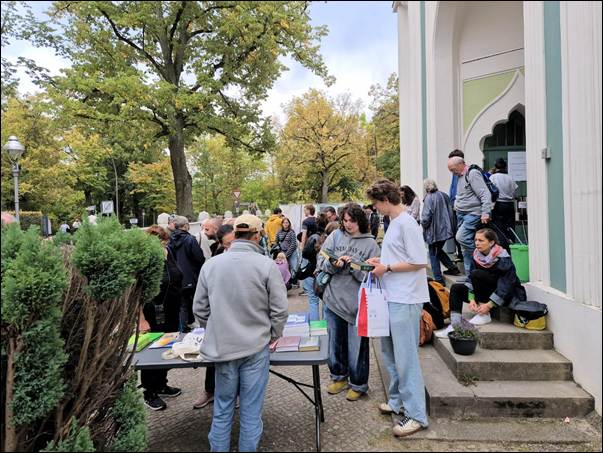
On 3 October 2026, the Berlin Mosque welcomed around 200 visitors for a lively and meaningful Open Day, held in collaboration with Muslim Culture Week Berlin.
The Mosque was filled with friendly conversations, curiosity, and a spirit of openness. Visitors explored the historic Mosque, learned about its history and Islamic traditions, and took part in guided tours and discussions. Islamic literature and educational materials were distributed, giving guests an opportunity to learn more beyond the event.
The day created a wonderful platform for dialogue, cultural exchange, mutual understanding, and peaceful coexistence, bringing people of different backgrounds together.
Sincere thanks to Galida Badoella from Suriname, Muhammad Ali, Yasir Aziz, Sabeena Bushra, Ambreen Aziz, Zunera Aziz, and Furqan Aziz, whose contribution made the day a warm and memorable occasion.
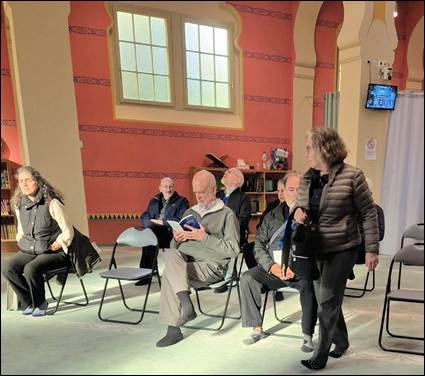
Shown below are photographs of visitors inside and outside the Mosque


American Jews visit the Berlin Mosque
Imam Amir Aziz informs that on 26th October 2026 a group of Jews and Muslims from an interfaith group in the USA visited the Mosque. They were very much interested in the history of the Mosque, the AAIIL, and its persecution in Pakistan. After the Imam’s presentation there was a question-answer session which was much appreciated.
See photos below

Contact Information
E-mail: islamic-view@ahmadiyya.org
For books on Islam and the Ahmadiyya Movement, please visit our websites:
(in Indonesian)
Read a selection of Lahore Ahmadiyya literature on the website archive.org at the link: http://bit.ly/4ok2NTj